Following the collapse of the commune in late 1985, Osho faced criminal charges from the United States government.
On November 14, 1985, Osho entered an Alford plea to two counts of immigration fraud. Under an , a defendant does not admit guilt but acknowledges that the prosecution has enough evidence to secure a conviction. He received a 10-year suspended sentence, was fined $400,000, and agreed to leave the United States immediately .
The Global Exile
After being deported from the US, Osho embarked on a global tour seeking a new country to establish a commune. However, the notoriety of Rajneeshpuram preceded him.
Over the course of 1986, Osho was denied entry, had visas revoked, or was deported by 21 different countries, including Greece, Switzerland, Sweden, Great Britain, and Ireland.
During this exile, Osho framed himself as a martyr to truth, publishing Socrates Poisoned Again After 25 Centuries (1986). He claimed that global governments were conspiring against him because his teachings threatened their religious and political control .
Return to Pune
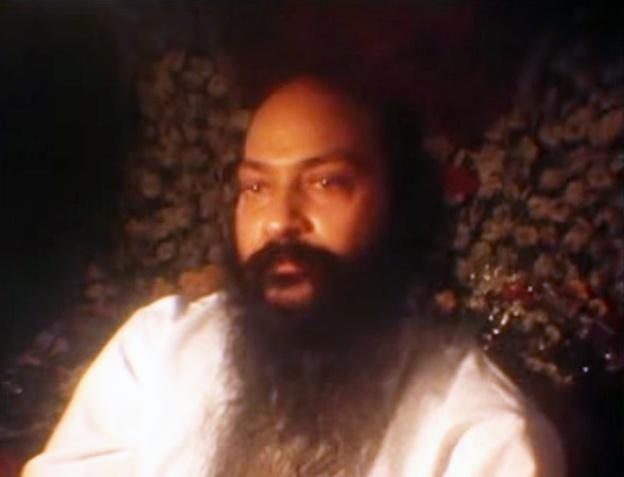
Unable to find a permanent home abroad, Osho returned to India in July 1986. By January 1987, he had resettled at the original ashram in Koregaon Park, Pune.
The ashram was rebranded as the "Osho International Meditation Resort," pivoting away from the chaotic and controversial encounter therapies of the 1970s toward a more structured, polished, and commercially viable model .
During these final years, Osho's health steadily declined. He often appeared frail during his evening discourses. In February 1989, he dropped the title "Bhagwan Shree Rajneesh" and officially adopted the name "Osho," derived from William James' concept of "oceanic experience" .
Death is not an end. It is only the drop disappearing into the ocean. Do not mourn for me; celebrate! If you have loved me, continue to meditate, continue to celebrate. My presence will be felt wherever people sit in silence together.
Death and the Question of Accountability
In April 1989, Osho entered a period of public silence. On January 19, 1990, at the age of 58, Osho died at the Pune ashram.
The official cause of death reported by his physician, Dr. Gokul Gokani, was heart failure (massive coronary thrombosis).
Some of his followers immediately propagated theories that he had been secretly poisoned by the US government while in custody in 1985, a claim Osho himself had suggested before his death. However, no independent medical evidence has ever substantiated this allegation.
Osho died without ever publicly apologizing or taking direct responsibility for the harm caused by his movement. While he expelled Sheela and blamed her for the crimes in Oregon, he never acknowledged his own role in fostering the culture of absolute obedience and isolation that made those crimes possible .
His epitaph, inscribed on his samadhi in Pune, reads: > "OSHO. Never Born, Never Died. Only Visited this Planet Earth between Dec 11 1931 – Jan 19 1990."
Evidence Inquiry: Historical Perspectives on Exile, Final Years, and Death (1985–1990)
Argued that while direct wiretaps linking Osho to the bio-agent laboratory were lacking, his absolute authoritarian control over the commune created and sanctioned the culture of lawlessness.
The relocation to the United States and the creation of a massive intentional community in Oregon, which ultimately collapsed amid corruption and federal investigations.
An assessment of Osho’s lasting influence on modern spirituality, the survival of his movement, and the enduring controversy surrounding his methods.
Primary References & Archival Records (5)
- [1]Rajneeshee Movement Investigation ReportsprimaryOregon Attorney General. (1986). State of Oregon.
Official investigation reports covering 1984–1986, including bioterror attack findings.
- [2]Socrates Poisoned Again After 25 CenturiesprimaryOsho (Rajneesh). (1986). St. Martin's Press.
Osho's reflections on deportation from the United States.
- [3]Zorba the Buddha: Sex, Spirituality, and Capitalism in the Global Osho MovementacademicHugh B. Urban. (2015). University of California Press.
Academic analysis of Osho's intersection of spirituality and consumer capitalism.
- [4]The Awakened One: The Life and Work of Bhagwan Shree RajneeshpartisanVasant Joshi. (1982). Harper & Row.
Sympathetic biography by a follower. Label as partisan.
- [5]Charisma and Control in Rajneesh CommunitiesacademicLewis Carter. (2011). Cambridge University Press.
Sociological analysis of commune dynamics, leadership structures, and group psychology.